

Written by Cory Mitchell. Updated by TraderHQ Staff.
An option is a great tool even for an investor. The covered call option strategy is commonly used by traders and investors who are holding stock, but seek an income stream from that investment. Before implementing a covered call options strategy the trader or investor should know what a covered call is, how the strategy works, when and why to implement it as well as the pros and cons of the strategy.
Covered Call Option Strategy
A call option is an agreement that provides the right, but not the obligation, to buy a stock at a specific “strike price.” Someone who buys a call option is hoping the stock price will rise above the strike price, in which case their option becomes more valuable and they make a profit. For this potential, the call buyer pays a “premium.”
This is where the covered call strategy comes in. If you own 100 shares of a stock, you can write a call option on that stock, with a strike price that’s above the current share price. For this you’ll receive a premium/income (from the buyer of the option).
For a complete overview of this income-generating strategy, see Investopedia’s guide to covered calls.
When writing a call, your profit (on the call) is limited to the premium received. Since you own the stock your risk on the written call option is limited. The shares you own are still susceptible to decline.
Assume a stock is trading at $50, and you decide to write a covered call option on the stock with a strike price of $52. The option premium is $1, so you receive $100 ($1 × 100 shares). If the price does nothing and the stock price is below $52 when the option expires you keep the stock, and you made $100 on the option premium.
If the stock price is above $52 at expiry, you give up your shares because the option buyer has the right to purchase your shares from you at $52. This is actually a favorable outcome, since you profited up to the $52 on the shares (up from $50 when you wrote the option) and you made $100 on the option, effectively netting $53 per share.
If the price of the stock drops, the option offsets your total loss on the stock by $100.
The graph below shows how this works. Profit potential is the Y axis while the price of the stock is the X axis. As the price drops, so does the profit, but it’s offset by the premium received. The premium increases profit if the stock doesn’t move, and the profit potential plateaus if the price moves above the strike price.

Figure 1. Profit Loss Graph for Covered Call Strategy, Source: Adapted from CBOE.com

The Covered Call Strategy - When and Why
The strategy is used for different reasons and at different times.
If a stock isn’t going up or down, you can get some income out of it by writing covered calls.
The stock may be a low volatility dividend-paying stock, but you want to increase your income from the stock by writing call options. Be careful here though—if you really like the stock you don’t want to have it called away if the stock price goes above the strike price.
If a stock you own has had a nice run higher, and you want to take profits, writing a covered call is one way to do it. If the price keeps going above the strike price your stock will be called away (you don’t own it anymore, the call buyer does) and you have the premium as a bonus. If the stock starts to drop you can sell it, keeping the premium as a bonus. In this case be sure to close the option trade, if it hasn’t already expired, at the same time you sell the stock. If you don’t, you’re “naked,” and if the stock price skyrockets you no longer have the shares to give to the call buyer. This means you’ll need to buy them at market price resulting in a big cost/loss.
If the stock is dropping and you think it could drop further, sell it. Don’t write covered calls on it. The premium received from the options won’t be enough to offset the price drop of a plummeting stock.
Covered Call Trading Example
Consider the following example using a retail stock. The price was trending higher but has now leveled off, ranging between $55 and $63. The price is currently around $58. You decide to write a covered call on the 100 shares you own, with a strike price at $62.50 and an expiry about three and a half months into the future.
If the price falls, the premium received helps offset your losses, and you can always sell the shares and close your written call for a small profit (since the price has dropped the price you pay to buy/offset your call should be lower than what someone paid you for it).
Current options prices are available from the Chicago Board Options Exchange.

Figure 2. Option Premiums for Call Options, Source: CBOE.com
Someone is willing to buy this option at approximately $1.46; since there’s no volume you’ll want to sell to this buyer and take the bid price (premiums will constantly fluctuate as the price of the stock fluctuates).
If the price rises above the strike you keep the option premium and get out near the top of the range. You get the strike price for your shares plus the premium, which means you effectively netted more than the stock’s current price. You give up gains if the stock continues to rise though, and if the stock plummets the premium only offsets a portion of the loss.
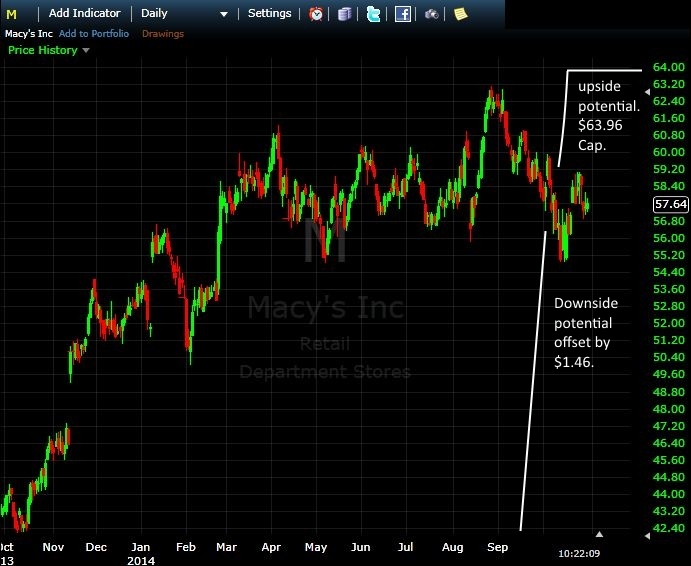
Figure 3. Profit/Loss Chart, Source: FreeStockCharts.com
Covered Call Pros and Cons
Options trades incur commissions, which will slightly reduce the premium received. Commissions aren’t factored into the above scenarios. Also, as the premium chart above shows, there isn’t always volume in options. That means it may be impossible to actually establish the option position exactly how you’d like.
A covered call is one of the simplest option strategies; it provides additional income, but caps your gain. If you really want to maintain a position in a stock, then covered calls may not be for you, since your stock may be called away.
Options are flexible in that you can close them at any time, realizing a profit or loss on the option position only. You don’t need to give up your stock. If you hold the option till expiry, you’ll have profited the entire premium if the price is below the strike price, or you’ll give up your stock if the price is above the strike.
The ideal scenario is when you get to keep the stock, the stock doesn’t really move, and you get the premium income. Unfortunately, in low volatility stocks the premium is usually very small, so the income potential is also very small.
The Bottom Line
A covered call strategy isn’t one you have to use, but it should be in your trading tool belt. The covered call provides a bump in income, while helping reduce some downside risk. For this you give up profit potential if the stock skyrockets. This shouldn’t be a major concern though, especially if you’re seeking an exit anyway. If you decide to sell your stock, close the option position as well, as a written call with no stock means you’re exposed to potentially large losses.
Frequently Asked Questions
How do I choose the right strike price for my covered call?
Select a strike price based on your goals. For income generation with minimal risk of assignment, choose strikes well above current price (lower premium but keep stock). For planned exits, choose at-the-money or slightly in-the-money strikes (higher premium, higher assignment probability). Consider technical resistance levels as natural strike price targets.
How often should I write covered calls on the same position?
Many investors write monthly covered calls, rolling positions each expiration cycle. Others prefer 45-60 day expirations for optimal time decay. The frequency depends on your income needs and willingness to actively manage positions. Some investors write calls only when the stock reaches specific price levels.
What happens if my stock drops significantly after writing a covered call?
The premium you received provides a small buffer against losses, but won’t protect against major declines. If the stock drops sharply, you’ll still own shares at a loss minus the premium received. This is why covered calls work best on stocks you’re willing to hold long-term and believe will recover—not on speculative positions.